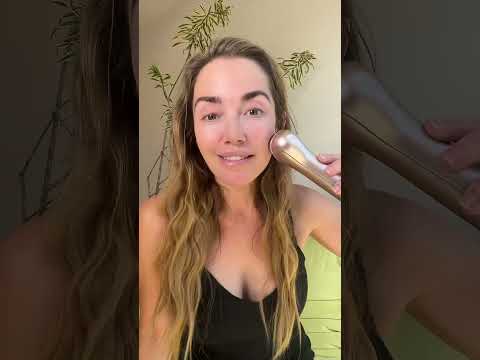
Both are here. They are not the same purchase, and the difference is worth understanding before you spend.
Heather Nicole selected every item on this page from what she uses in treatment. Some cost less than a good serum. One costs more than a course of facials, and replaces it. What they have in common is that she has used each of them on real skin, repeatedly, before putting her name near them.
The range on this page spans two orders of magnitude, from a derma roller you could buy without thinking to a professional system that replaces a year of appointments. That spread is deliberate. Skin does not improve because you bought the most expensive option. It improves because you used the right one consistently.
What follows is a guide to which is which, and who each one is actually for.
If you already know you want her own hardware rather than the wider selection, go straight to Skin Skulpt Devices.
What Is a Skincare Tool?
A skincare tool is any handheld object used to apply, work in, or physically stimulate skin during a routine. That covers rollers, gua sha stones, massaging tools and derma rollers. None of them contain electronics. They work through pressure, temperature or surface texture.
A skincare device is different. It applies energy, whether sound, light, current or plasma, and that energy is doing the work rather than your hand.
The distinction matters for one practical reason: tools support a routine, devices change what a routine can achieve. Most people who are disappointed by a tool bought it expecting a device.
Everyday Skincare Tools
These are the ones you reach for daily. They cost the least and ask the least of you.
Osmosis Cool Tool. A depuffing tool, used cold, on mornings when your face does not look like it slept. Nothing about it is complicated. That is the point.
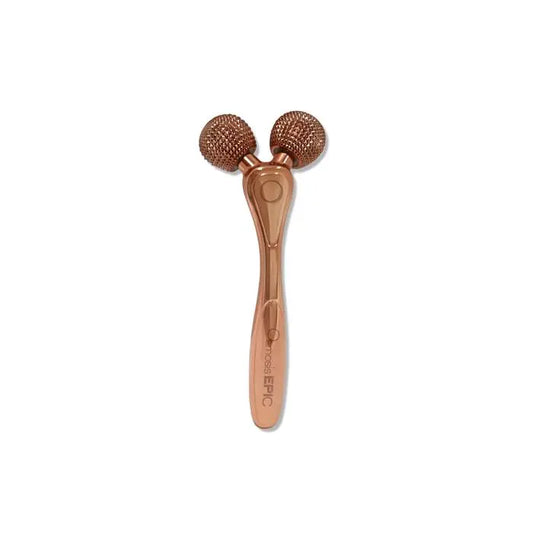
Osmosis EPIC Skin Tool. A facial massaging tool for lymphatic work along the jaw and cheekbone. Two minutes a side.
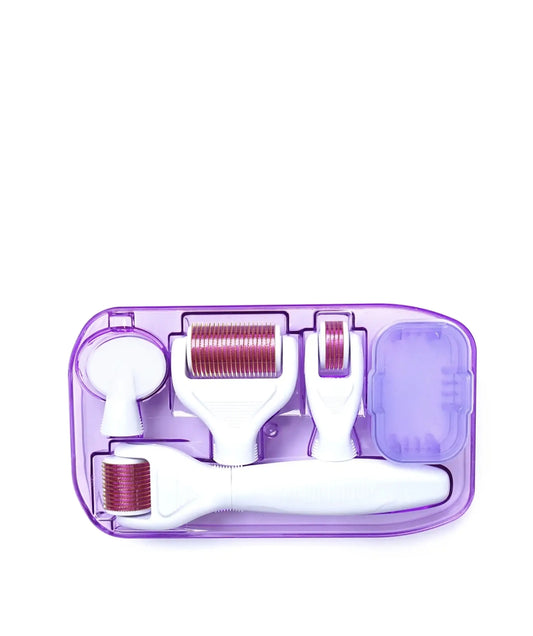
HN Derma Roller. Six heads in one case. More on this below, because it does more than the others.
For the full Osmosis range, see Osmosis.
Choose this if: You want a routine that feels like something, not just a product you apply and forget.
Look at this instead: If you want measurable change in firmness or fine lines, the AOMED Time Master Pro or the DPL LED Light Panel will do more.
Professional Skincare Devices for Home Use
This is where the economics change.
A single in-clinic ultrasound or light session runs into the hundreds, and a course of six is standard. Most of the devices on this page cost less than that course, and they do not expire.
That is the honest case for at home skincare devices. Not that they outperform a clinic, because they do not. A practitioner has stronger equipment and years of judgement behind every pass. What a device offers instead is frequency. One used twice a week for a year will outwork four appointments you had to schedule around your life.
Every device here was chosen by an esthetician who still treats faces professionally. That is the filter.
Choose this if: You are consistent, and you want results that accumulate rather than arrive.
Look at this instead: If you want one significant change rather than a routine, book a treatment with Heather directly. A device rewards patience, an appointment does not require it.
Skin Tightening and Facial Sculpting Devices
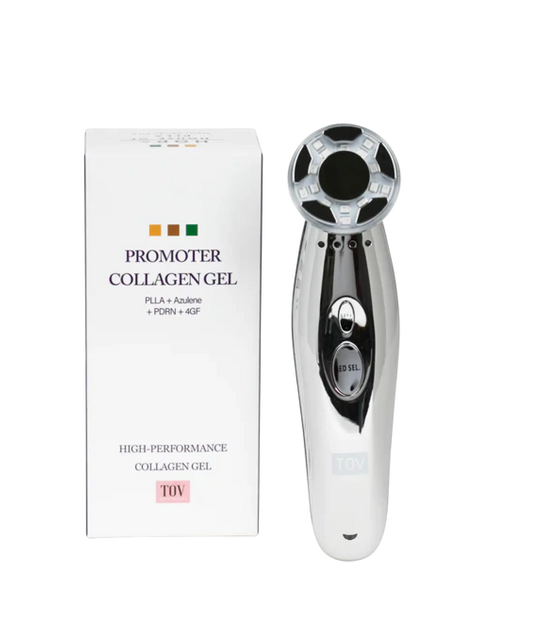
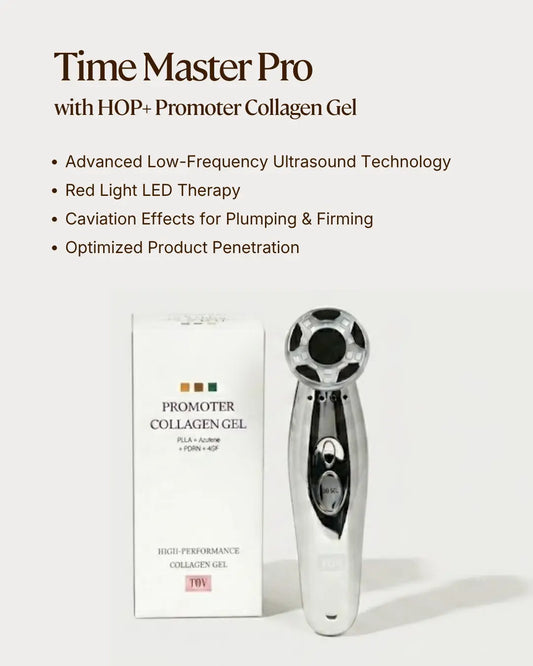
It is worth being precise about what it is, because most at-home tightening devices are not this. The Time Master Pro is ultrasound, not radiofrequency. It runs at 90,000 sound waves per second and produces no meaningful heat. Where radiofrequency tightens by warming tissue, ultrasound works through rapid oscillation instead, which increases fibroblast activity and, with that, collagen formation.
It combines three technologies in one head:
- Low-frequency ultrasound at 90,000 waves per second, for tightening and plumping
- EMS at a low 6V, which stimulates the facial muscles rather than the skin surface. Think of it as light resistance training for the 43 muscles in your face.
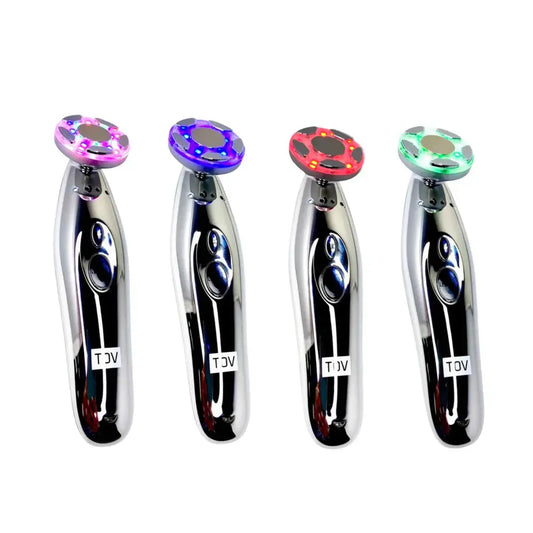
- LED across four wavelengths: blue at 470nm, green at 520nm, red at 650nm, infrared at 940nm
Skin laxity is not a surface problem, which is why creams have limits on it. Results here build over weeks rather than appearing overnight, though the immediate tightening from ultrasound is usually noticeable during the first pass.
Realistic expectation: firmer contour along the jaw and cheek, visible to you before it is visible to anyone else. Not a facelift. Anyone promising you that is selling something.
Choose this if: Your main concern is looseness or loss of definition, and you will use it consistently for three months.
Look at this instead: If your concern is pigmentation or breakouts rather than contour, the DPL LED Light Panel targets both more directly.
LED Light Therapy
Red light targets fine lines and firmness. Blue light targets acne bacteria. This panel does both. The Time Master Pro also carries LED, across four wavelengths, if you would rather have it built into a single device than sit in front of a panel.
LED or muscle stimulation? They solve different problems. LED works at the cellular level over time and asks nothing of you except sitting still. EMS and microcurrent work on muscle tone, and give a faster visible lift that fades without repetition. If you have acne alongside aging concerns, LED is the more useful of the two. If your concern is contour, it is the other way round.
Choose this if: You want a low-effort addition that compounds, and you can commit ten minutes several times a week.
Look at this instead: If you want visible change within days rather than months, the AOMED Time Master Pro tightens noticeably from the first pass.
Derma Rolling and Exfoliation
Rolling creates controlled micro-channels in the skin. Two things follow. The skin repairs, which builds collagen. And whatever you apply afterwards absorbs considerably better than it otherwise would.
That second point is why this pairs with Serums rather than replacing anything in your routine.
Heather is known as the Peel Queen, and resurfacing is the area she has spent the most time in. For chemical rather than mechanical resurfacing, see Skin Skulpt Skin Care and Masks & Treatments.
Choose this if: You want smoother texture and better absorption from products you already own.
Look at this instead: If you have active acne, rosacea or broken skin, do not roll over inflammation. The DPL LED Light Panel treats breakouts without breaking the surface.
FAQ
Do at-home skincare devices work?
Yes, with consistency. Clinical devices are stronger, but a device used twice weekly for a year delivers more cumulative stimulation than a handful of appointments. The variable is not the technology, it is whether you use it. Devices bought and abandoned after three weeks do nothing.
What is the difference between a skincare tool and a skincare device?
A tool works through pressure, temperature or texture. A device applies energy such as sound, light, current or plasma. Tools support a routine. Devices change what a routine can achieve. Most disappointment with tools comes from expecting device-level results.
How often should you use a skincare device?
It depends on the technology. The Time Master Pro is designed for ten minutes a day, two to three times a week. LED tolerates more frequent use. Derma rolling needs recovery time between sessions, usually around a week. Always follow the instructions supplied with your device.
Are at-home skincare devices worth it?
Compare against clinic pricing. A single professional session runs into the hundreds, and courses are usually six sessions. Most devices here cost less than one course and last years. The value depends entirely on whether you will use it consistently.
Do skin tightening devices really work?
For mild to moderate laxity, yes, gradually. Ultrasound increases fibroblast activity, which supports collagen formation over eight to twelve weeks. Results show as firmer contour rather than dramatic lift. They do not replace surgical or clinical tightening for significant laxity.
Is the Time Master Pro radiofrequency or ultrasound?
Ultrasound, not radiofrequency. It runs at 90,000 sound waves per second and produces no significant heat, which is the main practical difference. Radiofrequency tightens by warming tissue. Ultrasound works through rapid oscillation instead. The device also includes low-level EMS and four LED wavelengths.
Are skincare devices safe to use at home?
They are designed for consumer use, with output levels set well below professional equipment. Follow the supplied instructions rather than increasing intensity or duration. Avoid use over broken skin, active infection or recent injectables. Anyone with a pacemaker or implanted electronic device should speak to a doctor before using current-based technology.
Can you use multiple skincare devices together?
Not in the same session, in most cases. Stacking energy-based treatments increases irritation without increasing results. Alternate them across the week instead. LED is the exception and layers safely after most other treatments.
Which skincare device is best for my skin?
Match the technology to the concern. Laxity suits ultrasound and EMS. Acne and fine lines together suit LED. Texture and absorption suit derma rolling. Puffiness suits a massaging tool. The concern table above maps each one directly.